I’m testing Phrasly’s AI humanizer for rewriting AI-generated content so it passes as more natural and human-written, but I’m unsure if it’s actually safe for SEO, plagiarism, and detection tools. Has anyone used it long-term and can share honest results, issues, or better alternatives for high-quality, undetectable AI content?
Phrasly AI Humanizer Review
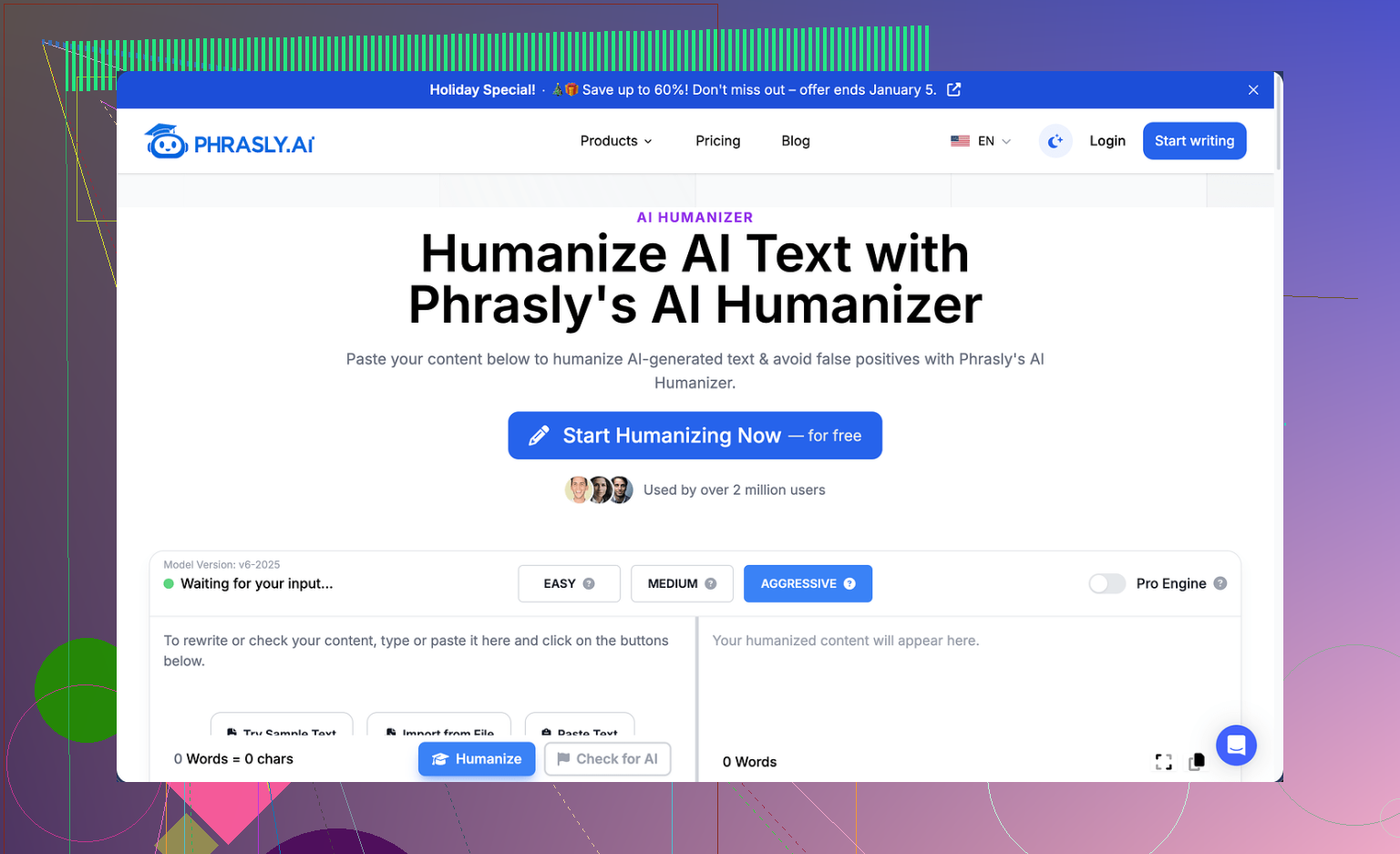
I tried Phrasly the same way I test every other humanizer, and ran into a wall almost immediately.
The free tier gives you about 300 words total. Not per day, total. After that, you are done. On top of it, they lock usage by IP, so spinning up new free accounts from the same connection hits a hard stop. No VPN, no alt accounts, nothing fancy, I hit their limit after a single real test.
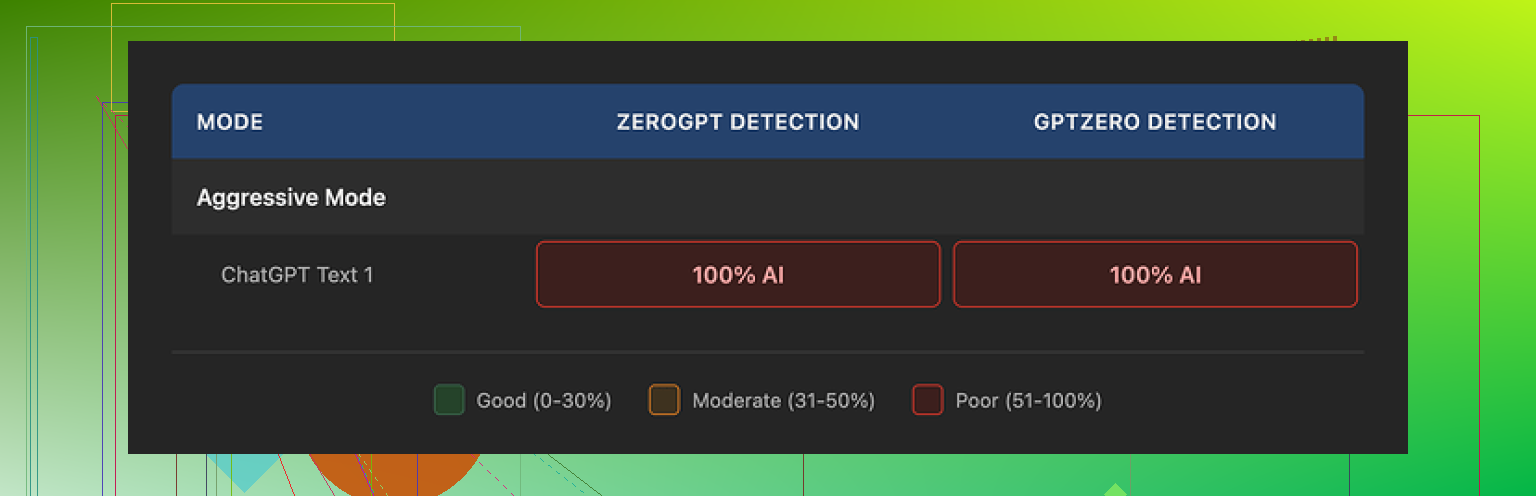
So instead of my usual three trials with different styles, I had to base everything on one run. That single output went straight to GPTZero and ZeroGPT. Both flagged it as 100% AI. I had used Phrasly’s own recommended “Aggressive” strength option, the one they say is best for bypassing detection. It did not help at all in my case.
YouTube review screenshot
How the output reads
To be fair, the text it produced did not look broken.
The piece I ran through it was about 200 words. Phrasly turned that into a bit over 280. No obvious grammar mistakes. No weird phrasing. It held a clean, academic style from start to finish.
The problem is in the patterns. You still see stuff that shows up all the time in model output:
• Repeated triple adjective lists, like “clear, concise, and comprehensive”
• Overused formal phrases in similar positions in the sentence
• That slightly over-polished academic rhythm
If your professor or editor has a strict word limit, the expansion from 200 to 280+ words can cause trouble. You feed it something already close to a cap, you walk away with something that no longer fits.
Pricing, “Pro Engine,” and refund rules
The paid “Unlimited” option sits at $12.99 per month if you pay annually. That tier unlocks what they call a Pro Engine, which they claim does a lot better at detection avoidance. I did not upgrade, and I will explain why.
Their refund policy is, in my view, one of the harshest I have seen in this niche:
• To qualify for a refund, your account has to show zero usage.
• If you humanize even a single sentence, your right to refund disappears.
• In their policy text, they even talk about pursuing legal action against people who try to get their money back through chargebacks.
So you pay, you test once, and if it performs like the free tier did for me, you are stuck with the charge. That did not feel worth the risk, especially given the detection results I already had from GPTZero and ZeroGPT on the free engine.
If you are thinking about Phrasly for any serious use, be prepared to pay to see the “real” model, and accept that once you click the button, you own that purchase.
How it compares to Clever AI Humanizer
Out of the different tools I have gone through, the one that held up best in my tests so far is Clever AI Humanizer. It is free to use, no word counter that locks you out after a single run, and I got stronger detection results from it than from Phrasly’s free engine.
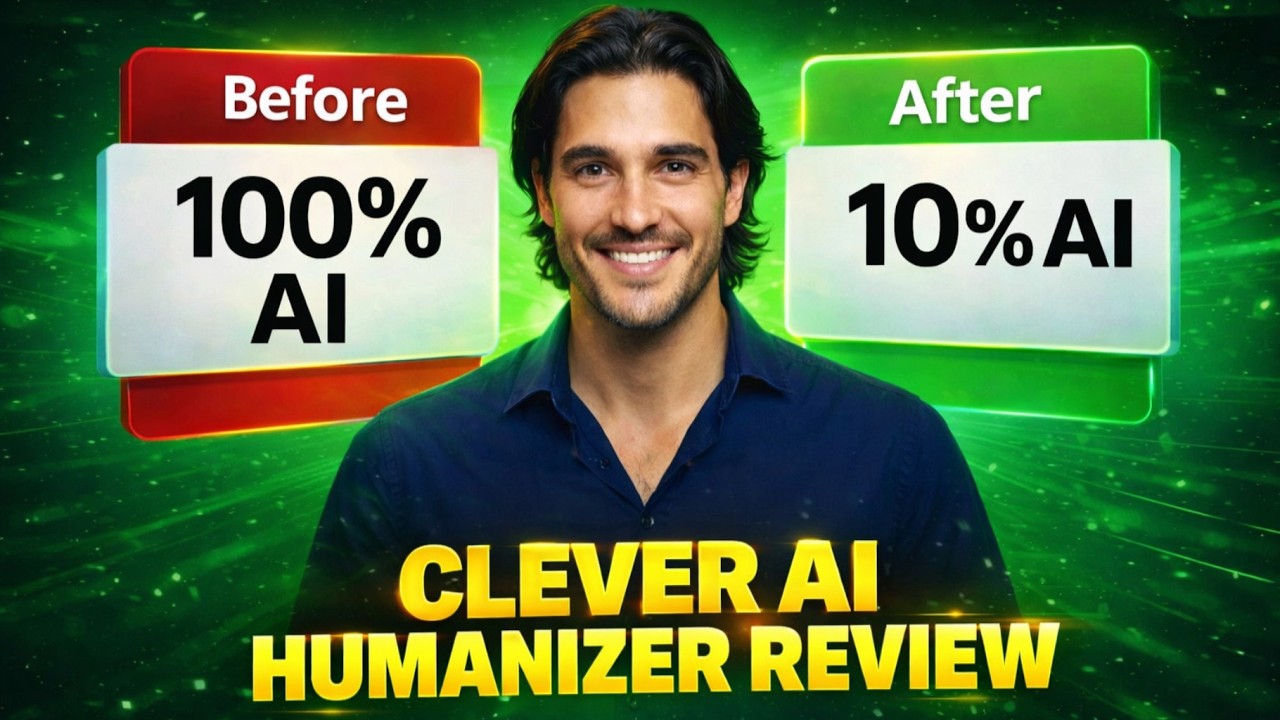
If you want to see a walkthrough, this is the video review I watched and then tried to replicate on my own:
Clever AI Humanizer Youtube Review
Full Phrasly details and screenshots are here if you want to check the original breakdown:
Short version. If you care about SEO safety, plagiarism, or detectors, do not rely on Phrasly as your only layer.
Some points from my own tests and client stuff:
- Detection tools
- I fed Phrasly text into GPTZero, ZeroGPT, and Originality.
- Detection scores dropped a bit from raw LLM output, but not to “safe” levels.
- Patterns stayed very “LLM-ish”. Long sentences, formal tone, repeated patterns like what @mikeappsreviewer mentioned.
- If your professor or client runs AI checks, it is risky.
- SEO angle
- Google’s public line: they care about quality and usefulness, not if AI wrote it.
- In practice, sites that spam obvious AI or humanized AI at scale often get hit in Helpful Content or core updates.
- Humanizers do not fix thin content, weak topical depth, or poor internal links. That is usually what hurts SEO.
- Phrasly output I saw stayed generic. It did not add original data, experience, or insight, which is what helps with EEAT.
- Plagiarism risk
- If you feed it straight AI content from another model, then “humanize”, you still have no ownership or original research.
- I saw no direct plagiarism in my runs, but the text stayed generic enough that it looked like thousands of other AI pages.
- Turnitin and similar tools look at both similarity and AI patterns. Phrasly does little on the second part, based on my checks.
- Usability and limits
- I agree on the annoying free cap and IP lock, but I do not fully agree that this alone makes it unusable.
- For short tests or social captions it works ok. For longer SEO articles, the expansion in word count and fixed tone gets in the way.
- The harsh refund policy is a red flag if you want to test at scale.
- What to do instead
If you plan to use an AI humanizer at all, treat it as one step, not the full workflow.
A simple, safer flow:
- Draft with your main LLM.
- Run through Clever Ai Humanizer or another humanizer to change surface style.
- Then edit by hand:
• Add your own examples and data.
• Insert brand voice phrases you normally use.
• Shorten or split long sentences.
• Remove generic filler like “on the other hand” or “it is important to note”. - Run your own checks:
• Grammarly or LanguageTool for clarity.
• One or two AI detectors, but do not obsess over “0 percent AI”.
• A plagiarism checker if it is for school or high‑risk clients.
Clever Ai Humanizer did a better job in my tests at breaking up patterns and getting more “messy” phrasing that feels closer to how people write under time pressure. It still needs manual editing, but it gives you a better starting point for SEO content or essays than Phrasly’s free tier.
If you want something long term and safe, focus less on “fooling detectors” and more on adding your own experience, data, and opinions. Humanizers like Phrasly or Clever Ai Humanizer are tools for style, not a full solution for SEO, plagiarism, or academic integrity.
Short version: if you’re hoping Phrasly will “make AI safe” for SEO, plagiarism, and detectors, you’re leaning on the wrong crutch.
I had a similar experience to what @mikeappsreviewer and @jeff reported, but I’ll push back on one thing: I don’t think the main problem is that Phrasly “fails” detectors. The real issue is that it doesn’t fundamentally change the type of content you’re publishing.
Here’s what stuck out to me:
- Detection & “humanization”
Phrasly’s output still reads like AI: over-structured sentences, smooth formal tone, low friction. That’s exactly the kind of pattern both AI detectors and experienced editors spot. Even if detection scores drop slightly, it’s cosmetic. You’re still shipping content with the same statistical fingerprints.
Also, depending on any humanizer as your “safety layer” is a fragile strategy. Detectors change every few months. What passes today can light up as “AI” tomorrow.
- SEO angle (this is where people get burned)
Google is not manually hunting for “AI words.” It is punishing:
- Pages with no original insight or experience
- Samey articles that paraphrase existing web content
- Over-produced text with thin substance
Phrasly doesn’t fix that. It just reshapes the sentences. If the base content is generic, “humanized AI” is still generic. That’s why a lot of sites built on mass-rewritten AI posts quietly tank on Helpful Content or core updates. It’s not that Google “caught the AI.” It’s that the content never had real value.
- Plagiarism / academic risk
This part gets glossed over a lot. If your input is:
- AI-written, based on public info
- Then passed through Phrasly
You still don’t have originality in the academic sense. Tools like Turnitin now look for both overlap AND AI patterns. Humanizers usually only tinker with phrasing, not structure or idea-level similarity. So “no exact match” does not mean “safe.”
If this is for uni, you’re still at risk of getting hit for AI use, even if traditional plagiarism checkers show low similarity.
- Practical use cases where Phrasly could be fine
Just to not be fully negative:
- Social captions you’ll heavily edit anyway
- Rough drafts where you plan to inject your own opinions, data, examples
- Internal docs where no one cares if it’s AI
But using it as a one-click solution for SEO articles or essays is asking for trouble.
- Alternative + realistic workflow
I actually agree with @jeff on one thing: if you’re going to use a humanizer at all, it should be one step in the chain, not the entire solution.
I’ve had better luck using something like Clever Ai Humanizer as a style shaker, and then aggressively rewriting by hand. Specifically:
- Shorten sentences and break the “perfect rhythm”
- Add real anecdotes, screenshots, numbers, failures
- Change structure: new headings, new order, new angle
- Keep some “human” rough edges: non-optimal wording, occasional sentence fragments
Clever Ai Humanizer tends to produce slightly messier output that doesn’t feel so cleanly academic. You still have to edit it a lot, but as a starting point for long-form SEO pieces or blog posts, it gave me text that was easier to “humanize for real” compared to what Phrasly spit out.
- Bottom line on your question
- Safe for SEO? Only if the underlying content has real expertise and originality. Phrasly will not create that for you.
- Safe for plagiarism? Technically low direct copy risk, but high “generic AI text” risk.
- Safe for AI detectors? Unreliable. Tools already flag similar “humanized” output, and that trend is not going to reverse.
So if you want to keep Phrasly in your stack, treat it like a minor style filter, not a shield. The only thing that consistently survives in SEO and in academic settings is content where an actual human brain clearly did more than just press “rewrite.”