I’m thinking about using Decopy AI Humanizer, but I’ve seen mixed feedback and can’t tell what’s real. I need help figuring out if the output actually sounds human, avoids AI detection issues, and is worth the price before I spend money on it.
Decopy AI Humanizer
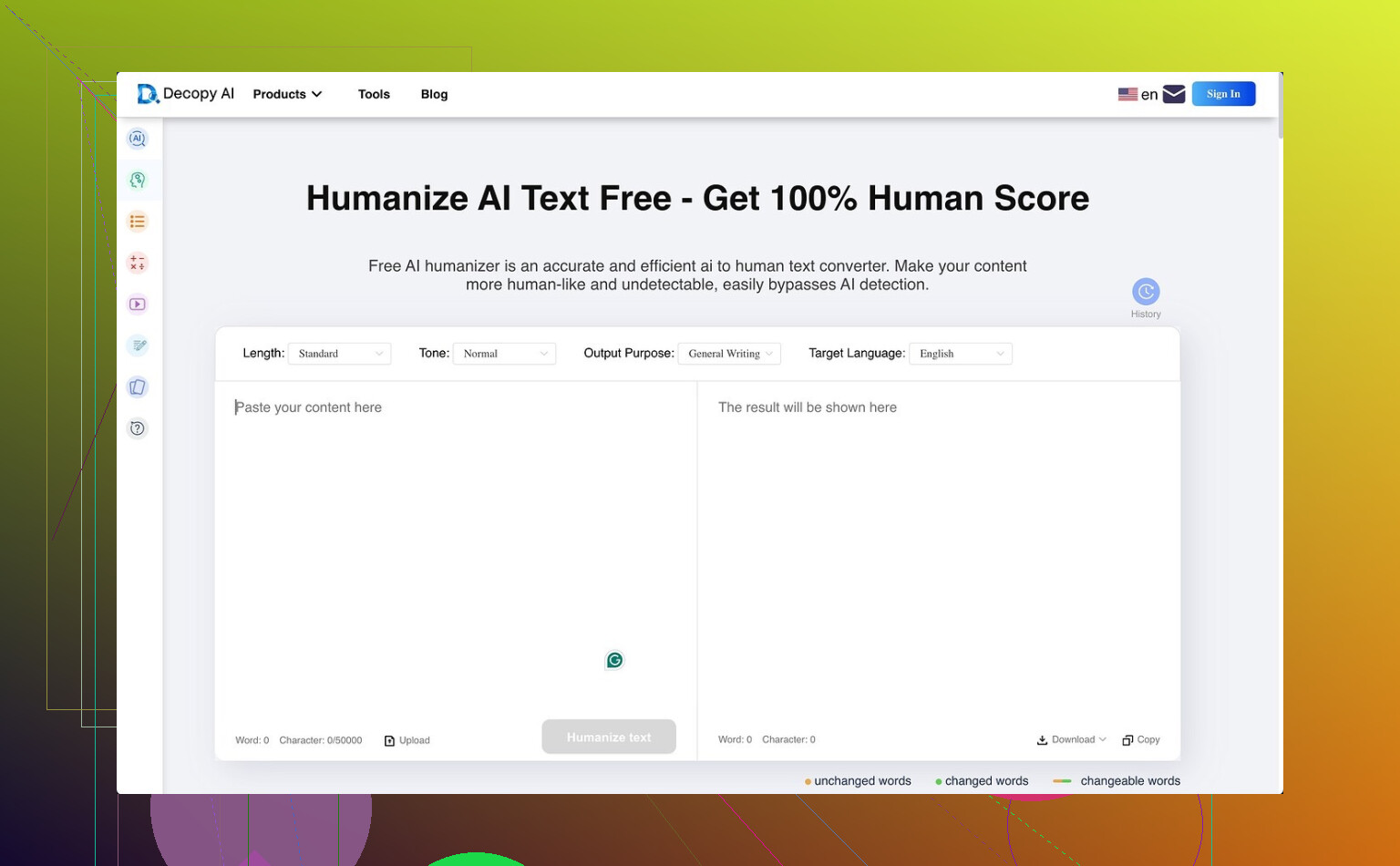
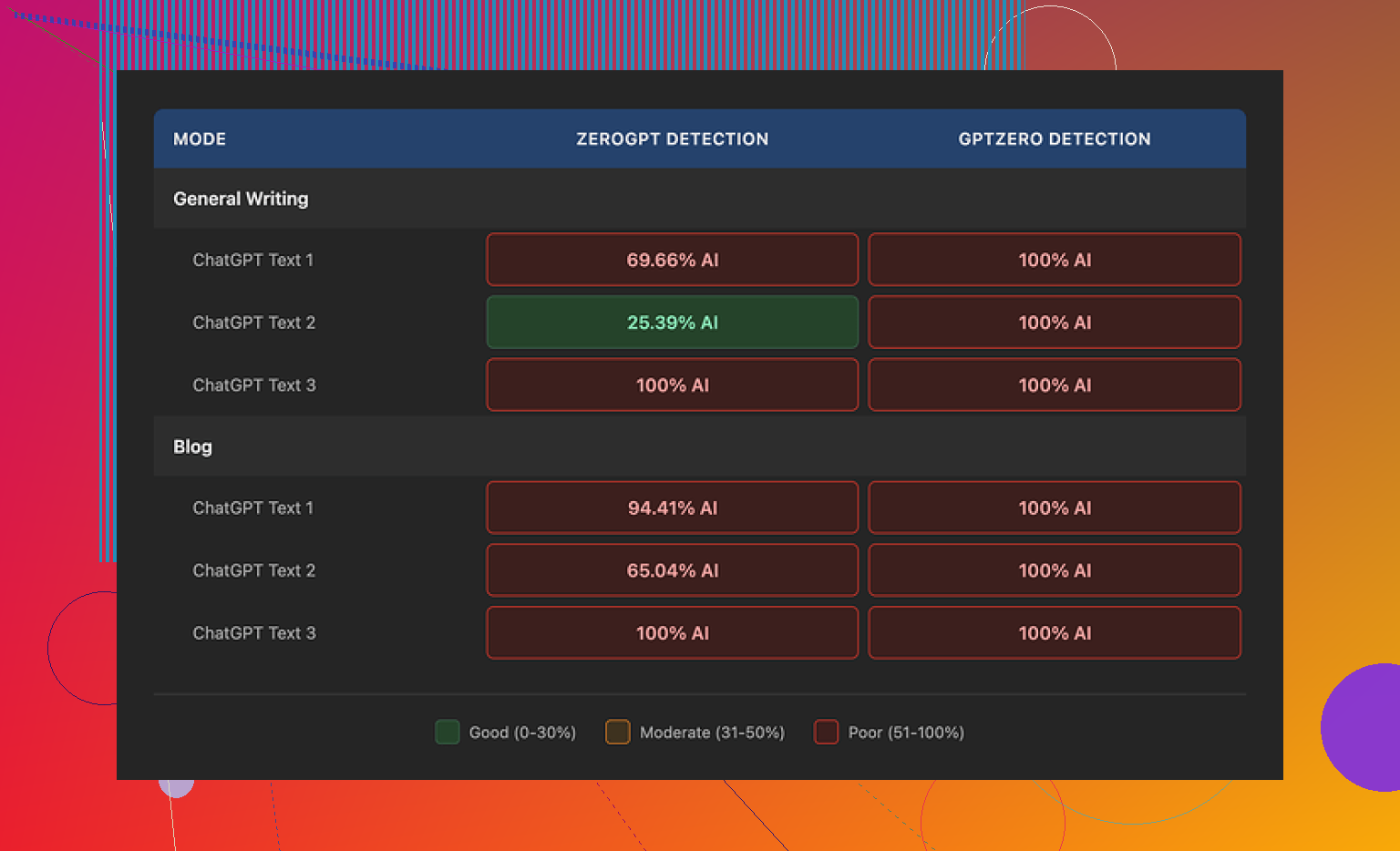
I spent some time with Decopy AI Humanizer, and on paper it looks loaded. You get 500 free runs, up to 50,000 characters in one shot, eight tone options, nine purpose presets, and a sentence-by-sentence rewrite button for cleanup. For a free tool, tht is a lot. The problem showed up once I checked the output with detectors. GPTZero flagged every sample as 100% AI, both in General Writing and Blog mode. ZeroGPT bounced around more, somewhere between roughly 25% and 100% depending on the passage, so the results were inconsistent but still weak.
One part I liked, it did not wreck grammar. I saw cleaner output here than I got from tools like UnAIMyText and HumanizeAI.io. If I score the writing quality alone, Blog mode felt like a 7/10, and General Writing was closer to 7.5/10. Still, the tool keeps flattening the text too much. Its idea of a blog voice feels weirdly childish, like it is aiming at kindergarten reading level. General Writing mode avoids some of that, though it still spits out phrases like 'digital stuff' and 'totally changing tech,' which read clumsy fast. At least it does not bloat or shrink the source much, so your original length stays close.
I also checked the privacy side because free tools tend to get fuzzy there. Decopy states a three-month retention window and says it follows GDPR and CCPA rules, which is more detail than some competitors give. What I did not find was a clear explanation of what happens to the exact text you paste into the tool, and for me thts still a gap.
From the tests I ran, Clever AI Humanizer gave me stronger humanized output and did it for free.
20 Likes
I’d treat Decopy as a cleanup tool, not a detector dodge tool.
My take is a bit different from @mikeappsreviewer on one point. I don’t think detector scores alone tell the whole story, becuase those tools conflict with each other all the time. What matters more is whether the rewrite sounds like something you would post without editing. On that part, Decopy is mixed.
What I saw:
- Grammar stays solid.
- Sentence flow is smoother than a lot of free humanizers.
- Word choice still feels off in places.
- Tone presets change surface style more than deep structure.
- Output often reads simplified, sometimes too simple.
So, if your goal is human sounding copy with low effort, it’s decent but not great. If your goal is passing AI detectors, I would not pay for it based on current results people are reporting. A tool failing hard on GPTZero more than once is a bad sign, even if ZeroGPT is inconsistent.
Best use case:
Paste AI text in, get a cleaner draft, then do your own edits. Add specifics, cut generic phrases, change openings, and rewrite transitions. That gives you a better shot than trusting one-click output.
Price-wise, free tier is worth testing. Paid tier, I’d wait unless you love the workflow. For most people, the value looks meh rn.
I’d split this into two questions: does it read better, and does it beat detectors. Those are not the same thing.
From what @mikeappsreviewer and @viajeroceleste described, Decopy seems fine at polishing clunky AI text, but not reliable if your main goal is “AI undetectable.” And honestly, I slightly disagree with the idea that detector scores can be mostly brushed off. They’re flawed, sure, but if one tool keeps getting slammed by multiple detectors over repeated tests, that’s a pattern, not just noise.
My take:
-
Human sounding? Sort of.
It sounds cleaned up, but not deeply human. A lot of these tools swap in simpler wording and call it natural. That can make copy feel flatter, not more human. -
Detection safe? Wouldn’t bet on it.
If you need confidence for school, client work, or publishing, this feels too shaky rn. -
Worth paying for? Probably not.
Free tier makes sense to test. Paid tier only makes sense if you already know you like its workflow and you’re using it as an editing shortcut, not a magic disguise button.
The part that matters most to me is whether the text has actual human signals: specific details, uneven rhythm, opinionated phrasing, little quirks. Most humanizers still miss that. They make text smoother, but also more generic. Decopy sounds like it lands in that exact trap.
So yeah, usable as a first-pass rewriter. Not somthing I’d trust as a detector-proof solution, and def not an auto-buy.
Decopy works better as a basic rewriter than an AI detector fix. Its grammar stays clean, but wording often feels flat or childish. GPTZero scoring samples at 100% AI makes the paid plan hard to defend. Test the free tier only if you like its workflow.
A simpler option is voice dictation. Read the source, close it, then explain the idea aloud into Google Docs or your phone. Your natural pauses, wording, and opinions will shape the text. Proofread the transcript and fix obvious erros. This avoids generic humanizer phrasing and costs nothing.
Before you pay anything, take one paragraph you actually care about, push it through Decopy on the preset closest to your real use case, then check it on whatever detector your teacher, client, or platform uses. Not GPTZero because it’s popular. The one that matters for you. If it fails there, the other 499 free runs won’t save you.
I think @viajeroceleste has the right frame treating it as cleanup, but I’d go a step further. The detector goal is a moving target. Even if a humanizer scores clean today, detector models get retrained, and text that passed last month can flag next month. So paying a subscription to ‘beat detection’ is buying a result with a short shelf life. That alone makes the free tier the only sane starting point, which lines up with what most of you already said.
Where I disagree slightly with @techchizkid: a repeated 100% AI flag isn’t always the tool being weak. Some source text is just structurally predictable, short sentences, even rhythm, no real stance, and no rewriter fixes that without changing the actual content. If your input is generic, the output stays generic. That’s a you problem, not just a Decopy problem.
The thing people keep skipping is effort math. A one-click humanizer saves maybe two minutes, then you spend ten cleaning up ‘digital stuff’ phrasing and re-adding specifics. At that point you did most of the human work anyway. So my honest take: use Decopy free to smooth grammar on clunky drafts, ignore its detection promise entirely, and never let it write the parts that need an opinion or a real detail. If your writing has no personal angle to begin with, no tool on this thread fixes that, including the voice dictation trick @omeganinja6093 mentioned, though that one at least forces your own wording in.