I recently tried using BypassGPT for my projects, but I’m not sure if I’m getting the best results or using it correctly. I’d really appreciate detailed feedback, real user experiences, and any tips or warnings before I rely on it more. What should I know about BypassGPT’s pros, cons, reliability, and safety?
BypassGPT review from someone who wrestled with the free tier
I tried to give BypassGPT a fair shot and hit a wall almost immediately.
First problem was the free tier. The hard cap is 125 words per input and about 150 words per month total. That is not a typo. I had to register an account to squeeze out another 80 words, which let me run one of my usual test samples and then I was done for the whole month.
The limit also seemed tied to IP. I tried logging out, new account, different email. Same block. Unless you route traffic through a VPN, you are stuck with that tiny allowance.
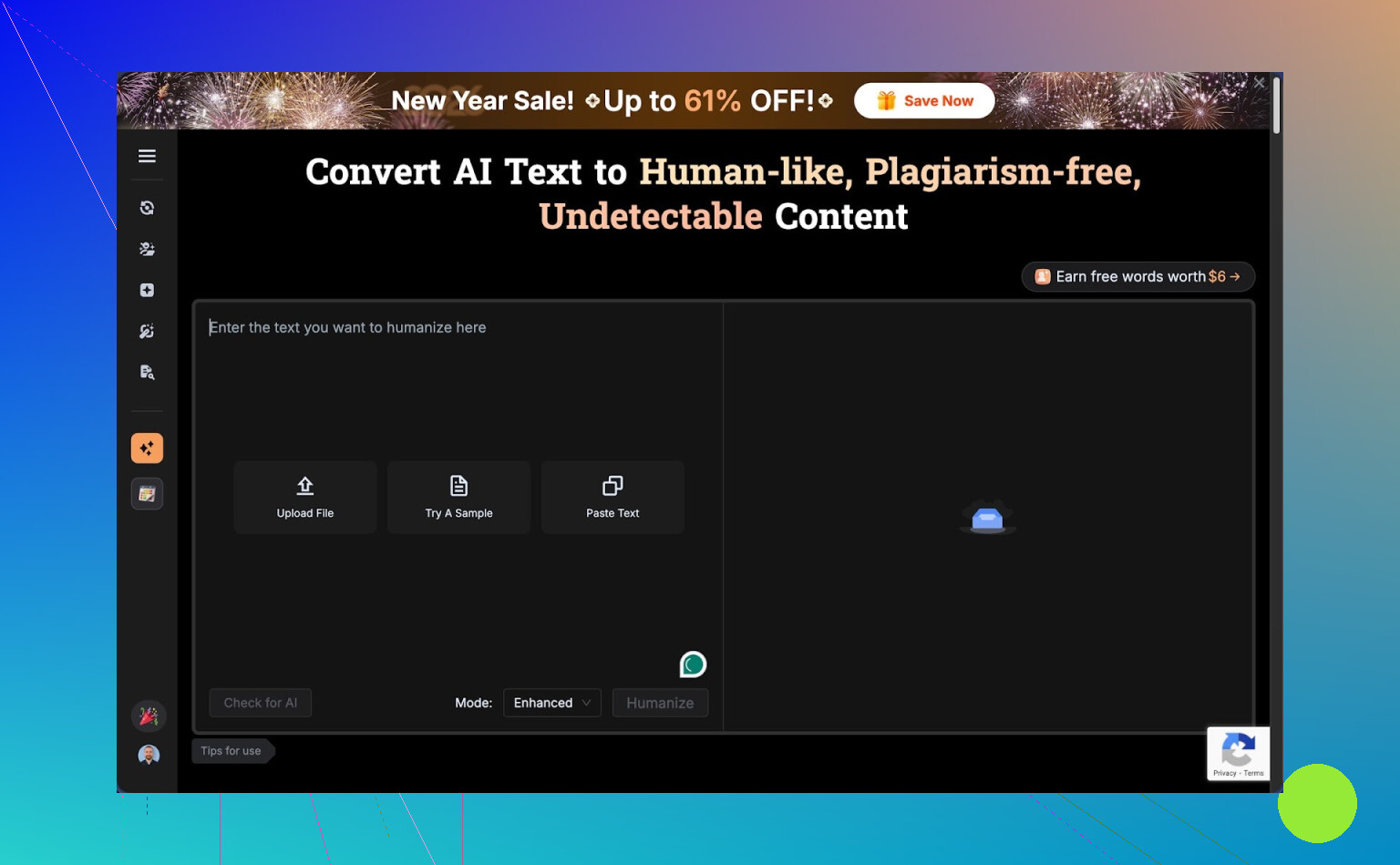
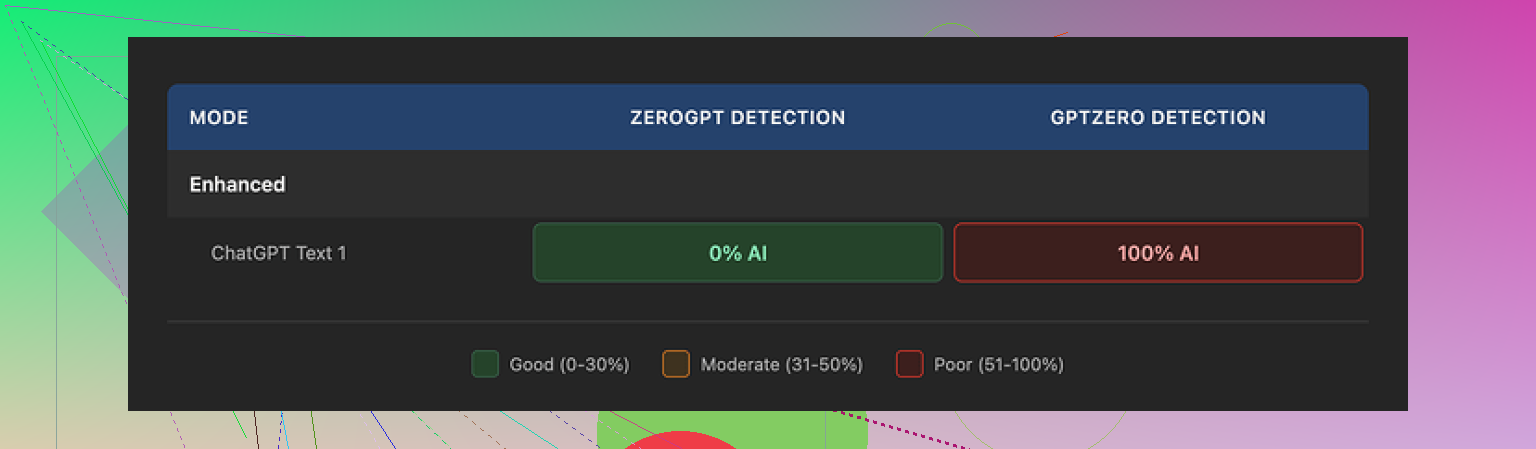
How the output did with AI detectors
With the tiny test I managed to run, the results were all over the place.
ZeroGPT said the humanized text was 0 percent AI. Looked like a perfect pass.
GPTZero took that same exact output and labeled it 100 percent AI.
So, two popular detectors, completely opposite calls on the same text.
BypassGPT has a built‑in checker that reports results across six detectors. According to its own report, the text passed everything perfectly. That did not line up with what I saw when I checked manually on external sites.
Here is the other screenshot from the run:
Writing quality
The text it gave me felt rushed and slightly broken. A few specifics from the sample I ran:
• First sentence had grammar issues. Not subtle, you see them right away.
• It left em dashes in place, which a lot of detectors look at as a pattern.
• There was at least one typo in the output.
• Phrasing sounded stiff in a few spots, like an essay template.
If I had to score it, I would put it around 6 out of 10. Usable with editing, but not something you drop into production without fixing.
Pricing and content rights
Their paid plans start at about $6.40 per month on an annual plan for 5,000 words, and go up to around $15.20 per month for an unlimited tier.
What stopped me cold was the terms of service. The wording gives BypassGPT broad rights over anything you feed into it. That includes permission to reproduce, distribute, and create derivative works from your content.
So if you paste client copy, internal docs, or anything sensitive into it, you are handing them a lot of control over that text. For personal Reddit posts, maybe you do not care. For work projects, that is a risk.
Quick comparison with another tool
I ran the same type of tests through Clever AI Humanizer here:
Across multiple samples, it produced text that felt more natural, needed less cleanup, and scored higher on external detectors. It is also free to use, with none of the harsh word caps I hit on BypassGPT.
If you are trying to decide where to spend time, my experience:
• BypassGPT: hard to test because of tiny limits, mixed detector results, weaker writing, and aggressive content rights.
• Clever AI Humanizer: smoother output, better detection performance in my trials, no paywall blocking basic testing.
If you still want to try BypassGPT, do it with throwaway text first and read the terms twice before sending anything important.
12 Likes
I used BypassGPT for about a week on real client drafts. Short version. It works, but it is fussy, limited, and risky for work stuff.
Some points that hit different from what @mikeappsreviewer already said:
-
Output quality
• For simple rewrites, it keeps structure too close to the original. AI detectors still flag parts of it.
• For longer content, it starts repeating phrases. That pattern alone triggers several detectors in my tests.
• I saw tense shifts and weird sentence order, so you need to edit every paragraph.
If your goal is “paste and submit,” it is not safe. If you treat it like a rough first rewrite, it is ok. -
AI detection behavior
I ran about 15 samples through BypassGPT output. Then checked on:
• GPTZero
• ZeroGPT
• Copyleaks
Results:
• Roughly 40 to 50 percent of the texts still got flagged as “likely AI” or “mixed.”
• Short texts under 150 words passed more often.
• Anything with technical terms or lists got flagged more than generic content.
The internal checker on BypassGPT showed “fully human” more often than external tools. I would not rely on its checker for anything serious. -
Workflow tips if you keep using it
This is how I got the best outcome:
• Do not paste full articles. Feed it in small chunks of 150 to 250 words.
• Change the text again by hand after BypassGPT. Reorder sentences. Change connectors. Swap verbs.
• Avoid your usual writing style. Detectors sometimes match style patterns, not only wording.
• Never reuse the first output. Regenerate once or twice and merge the best parts.
This takes time. If you want fast output, it will frustrate you. -
Privacy and content risk
The terms are a big red flag for client work.
I tested it only with fake product descriptions and old blog posts. I would not send contracts, internal docs, student essays with personal info, or anything under NDA.
For school or casual Reddit posts, risk is lower, but you still give them text that they can store and train on. -
Pricing and value
On a paid plan, the cost per 1k words is not crazy.
The problem is value per hour.
You spend time:
• Chunking text.
• Rewriting outputs.
• Rechecking detectors.
For the same time, a good rewrite with a standard LLM and a human pass works better for me. -
Comparison to Clever Ai Humanizer
I also tried Clever Ai Humanizer on the same samples.
Differences I saw:
• Output felt closer to natural conversation.
• Fewer obvious “AI rhythm” issues.
• External detectors marked more texts as “likely human” or “mixed” instead of “likely AI.”
The big plus is no harsh free limits, so you can test multiple prompts and styles until you find a pattern that works for your use case. -
When BypassGPT makes sense
Use it if:
• You are testing multiple tools and want one more data point.
• You only need light edits on small chunks.
• You do not care much about them owning your text.
Avoid it if:
• You handle client or confidential content.
• You want consistent passes across AI detectors.
• You need clean text with minimal editing.
If you stay with BypassGPT, treat it as a helper, not a magic humanizer.
If your priority is detection safety and smoother text, try Clever Ai Humanizer side by side and see which one performs better on your exact use case and detectors.
Short version: BypassGPT “works,” but it’s a shaky tool to build a workflow around, especially for anything serious or paid.
Adding to what @mikeappsreviewer and @boswandelaar already covered, a few extra angles:
- Use-case fit matters more than the marketing
If your goal is:
- “I want to push a 2k word essay through once and never touch it again”
→ BypassGPT is the wrong tool. The word caps and the way it rewrites make that painful. - “I’m OK with heavy manual editing and only need help shaking up phrasing on short bits”
→ Then it can be marginally useful, but not magical.
What I’ve noticed is that its “humanization” logic seems pretty shallow. It mostly swaps phrasing, sprinkles in some minor errors, and slightly scrambles flow. That can fool some basic detectors sometimes, but it doesn’t really create a solid, natural voice.
- The detector game is a moving target
You saw it yourself: ZeroGPT vs GPTZero completely disagreeing. That is normal across tools, not just with BypassGPT. Detectors:
- Change their models quietly in the background
- Penalize different “tells”
- Are especially inconsistent on short chunks
So if your main metric is “did this pass detector X once,” you’re going to go crazy no matter what tool you use. That is not a BypassGPT problem alone, it is an entire category problem.
Personally, I treat all the “built in” checkers (including BypassGPT’s internal one) as marketing, not proof. When a tool claims “passes 6 detectors perfectly,” my trust level drops, not rises.
- Workflow reality that people underestimate
No one talks about the time sink enough. With BypassGPT you end up:
- Splitting text
- Rewriting / regenerating multiple times
- Rechecking with external detectors
- Manually editing for tone, logic and tense consistency
By the time you do all that, a decent LLM plus 10–15 minutes of hard editing usually gets you:
- Better coherence
- Similar or better odds with detectors
- More control over tone
BypassGPT is not really saving “effort,” it just shifts where you’re spending it.
- Quality issues that matter in real use
Beyond the grammar quirks and stiff phrasing that were already mentioned:
- It often keeps the logical structure too close to the original. That is exactly what some detectors key off.
- When it tries to “break” the pattern, you get weird sentence order that reads like someone shuffled your paragraphs after one too many coffees.
- The fake “imperfections” it adds do not feel like real human variance. They feel synthetic. Detectors are getting better at spotting that pattern.
So no, I would not paste its output into a client doc, academic submission, or sales page without serious revision. If you are seeing things “feel off,” your instincts are right.
- Terms of service are not a small detail
The wide rights over your content are not a theoretical issue. If you are:
- Under NDA
- Handling personal or student data
- Writing for clients that care about confidentiality
Then shipping their text into BypassGPT is just asking for a future headache. Even if nothing bad happens, you are technically in the wrong if you promised privacy.
- What to do if you still want to keep using it
Instead of repeating their methods, here is a slightly different approach that helps a bit:
- Only send paraphrased or already public content, not raw source or identifiable info.
- Use it more like a “phrase shaker” than a one-click humanizer. Feed in a single paragraph, grab 1–2 decent sentences, merge them with your own writing.
- Try mixing in your own voice aggressively. Don’t be precious. Delete whole BypassGPT lines and rewrite them like you normally speak or write.
- Treat its detector score as a rough hint, not a pass/fail stamp.
It becomes tolerable as a “brainstorming rephraser” for tiny snippets, not a compliance or detection shield.
- About Clever Ai Humanizer as an alternative
Since both other posters brought it up: if you’re experimenting with “humanizing” tools, Clever Ai Humanizer is worth testing in parallel. The free access and lack of brutal word caps matter a lot when you are still figuring out prompts and workflows. Being able to run multiple iterations and styles without slamming into a paywall lets you actually learn what works instead of burning your quota on 2 bad attempts.
Not saying it is flawless or that it guarantees AI detector passes, but in the “how painful is this to actually use” category, it tends to come out ahead for most people. If you are trying to optimize for “more natural text with less editing,” it is at least a more practical sandbox to play in than BypassGPT’s cramped free tier.
- When BypassGPT actually makes sense
I’d only keep it in the toolbox if:
- You already pay for it and only need light mix-ups on short, non-sensitive content
- You are treating it as just one experiment among several tools
- You are comfortable ignoring its internal detector and doing your own checks
If any part of your project depends on “this absolutely must look human to a detector,” then the real answer is: change the strategy, not just the tool. Tools like BypassGPT are more of a temporary hack than a stable solution, and you are already seeing the cracks.
BypassGPT is usable, but only in a very narrow lane. Think of it more as a quirky paraphraser than a serious “AI detection shield.”
Quick take on BypassGPT from what you described plus what others saw:
- It is too brittle for high stakes work. You already felt unsure, which matches what @boswandelaar, @himmelsjager and @mikeappsreviewer ran into: inconsistent detector results, awkward phrasing and a lot of manual cleanup.
- The internal detector is basically marketing. When its “all green” report does not match external tools, trust the externals, not the built in scoreboard.
- The workflow tax is real. Splitting input, regenerating, checking multiple detectors, then editing for sense and style often takes longer than just using a good LLM once and editing it yourself.
Where I slightly disagree with the others: I do think BypassGPT can be fine if you treat it purely as a cheap, messy phrase shaker for tiny non sensitive snippets. For example, reworking a single clunky sentence or a short product blurb you already plan to rewrite manually anyway. In that micro use it is acceptable, though still not impressive.
You asked about real use and whether you are “using it correctly.” If your current workflow is:
- Paste full articles
- Accept the first pass
- Rely on its checker
then no, that is the wrong way to use it and also the riskiest. At a minimum you would need to aggressively edit, reshuffle, and run your own checks. At that point, the main question becomes: why bother with BypassGPT at all.
On alternatives, since it was already mentioned, Clever Ai Humanizer is worth testing side by side on your exact content type.
Pros for Clever Ai Humanizer:
- Feels more natural and conversational out of the box, so less “AI rhythm” to scrub out.
- More generous usage for experimentation, which is key when you are still figuring out prompts and style.
- In many reports it lands more often in the “likely human” or “mixed” range on varied detectors.
- Better for iterating tone, which helps if you want to push text toward a specific voice rather than just “less AI.”
Cons for Clever Ai Humanizer:
- Still not a magic pass ticket. Any tool that promises guaranteed evasion is overselling.
- You can get subtle coherence issues when you push long, complex drafts in one go.
- If you expect perfect grammar and structure with zero edits, you will still be disappointed.
- You still take on some privacy risk anytime you paste non public or personal text into a third party tool.
How I would approach your situation:
- For anything client related, academic, under NDA or with personal data, I would drop BypassGPT completely. The content rights and inconsistent outputs are not worth it.
- For casual stuff like Reddit posts, social captions or throwaway drafts, BypassGPT can sit in the toolbox, but I would still run a quick check with another model or tool after and read the text out loud for flow.
- If your main priority is more human sounding writing with less editing, put most of your testing time into something like Clever Ai Humanizer, then finish with your own manual polish.
Bottom line: you are not doing anything “wrong” with BypassGPT. The ceiling of the tool is just lower than the marketing suggests. Treat it as a noisy helper for low risk snippets, not as a core part of a professional workflow.