I’ve been testing Ahrefs AI Humanizer for my content, but I’m unsure if it’s actually helping with rankings and avoiding AI detection or just adding extra steps. Can anyone share real experiences, pros, cons, and whether it’s worth using long-term for SEO-focused articles?
Ahrefs AI Humanizer – my notes after messing with it for a few days
Ahrefs dropped an “AI Humanizer” inside their Word Count platform, so I went and hammered it with a bunch of test texts to see if it holds up against detectors.
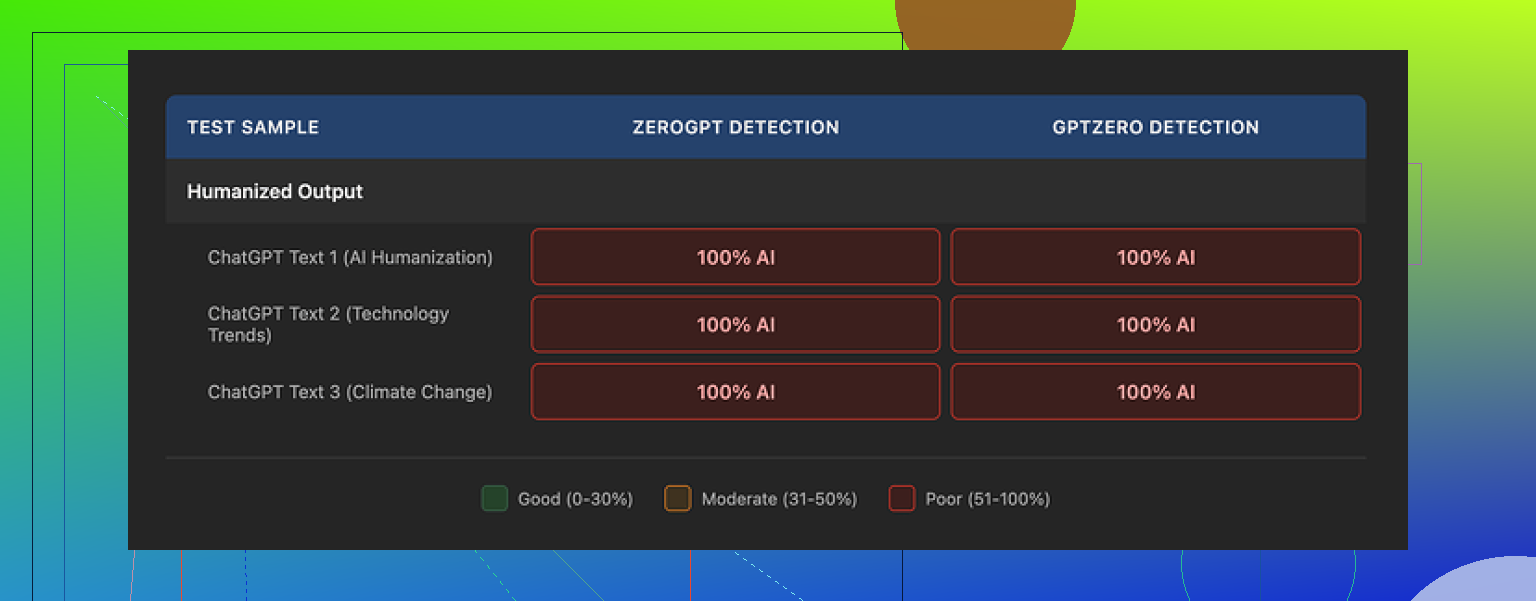
Short answer from my runs: it failed every serious check I threw at it.
What I tested
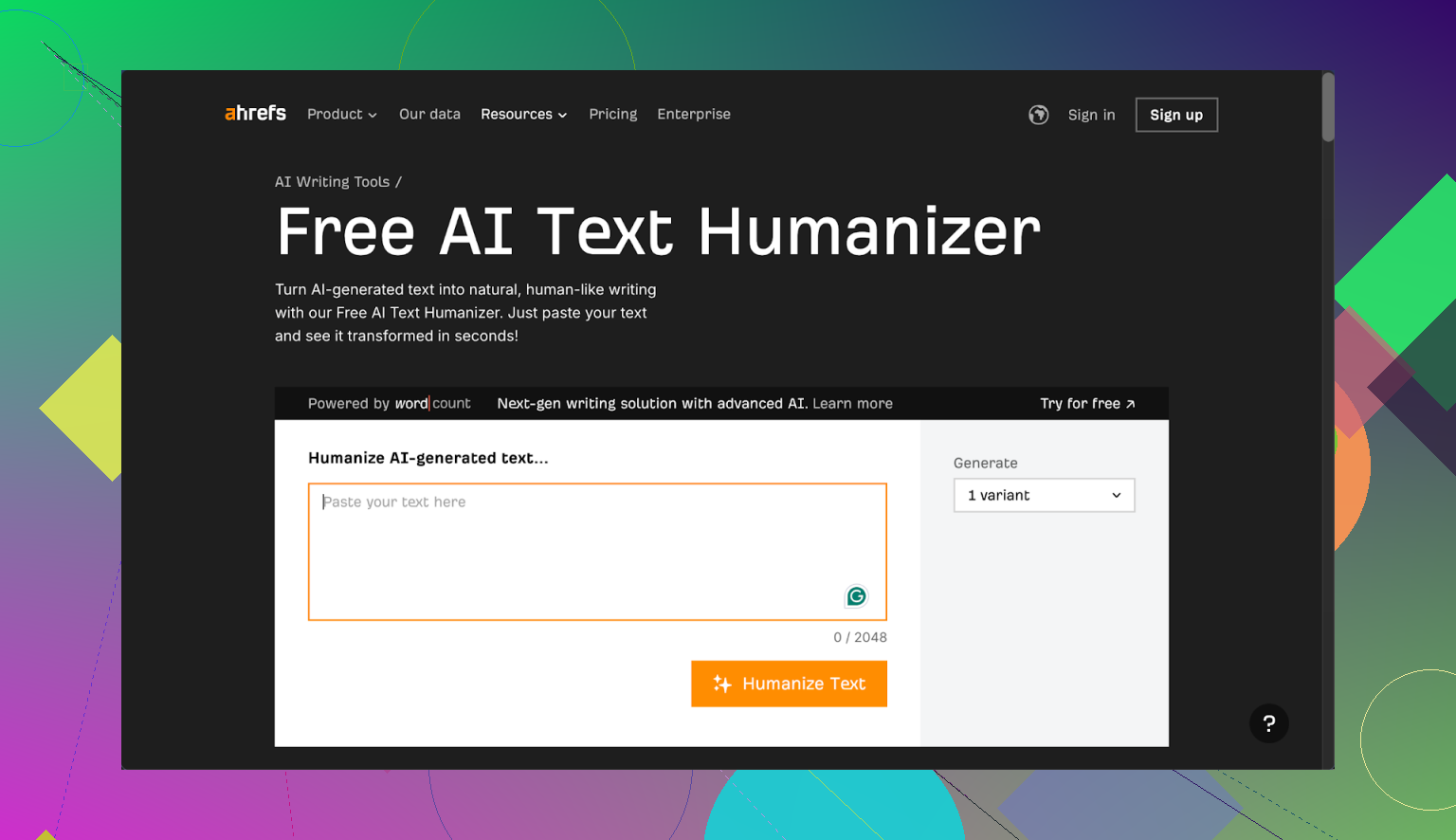
I used the humanizer through the Word Count interface here:
https://cleverhumanizer.ai/community/t/ahrefs-ai-humanizer-review-with-ai-detection-proof/24
My process was simple:
- Take obvious AI text. Things like blog intros from GPT, product descriptions, generic “climate change is one of the most pressing global issues” type stuff.
- Run the raw text through:
- GPTZero
- ZeroGPT
- Feed the same text to Ahrefs AI Humanizer.
- Take the “humanized” version and send it back through GPTZero and ZeroGPT.
I repeated that with different topics, lengths, and tones.
Result every single time: both GPTZero and ZeroGPT flagged the Ahrefs output as 100% AI. No partial scores, no “mixed” verdicts. Straight 100%.
The strange part
Here is the thing that threw me.
Ahrefs shows its own AI detection score above the output it generates. On my tests, that internal detector labeled its own “humanized” text as 100% AI.
So the page does this:
- You paste your text.
- Hit humanize.
- It spits out a cleaned-up version.
- Right above it, Ahrefs tells you: “Yep, this is AI.”
I do not know if they wired the humanizer and detector to different models or if they did not tune the thing at all, but from a user point of view it feels broken. You hit a button that says “Humanize” and the same screen tells you it did not happen.
What the output looks like
Quality wise, I would give the text around 7 out of 10.
Here is what I kept seeing:
- Grammar: clean. No weird commas, no broken sentences.
- Flow: smooth, a bit “essay-like” but readable.
- Style: still screams AI to anyone who reads a lot of AI text.
Some consistent patterns:
- It leaves em dashes untouched.
If your original has those long AI-style em dash chains, they survive. Detectors love those patterns. - It keeps classic AI intros.
Lines like “one of the most pressing global issues” kept popping up. If you use detectors daily, those phrases are red flags. - Sentence rhythm stays uniform.
Very even length, very “textbook” structure. Humans tend to mix short and long sentences without thinking.
So if your goal is to get “slightly nicer wording” and you do not care about AI detection, the output is fine. If your goal is to move detection scores, my tests say it does not.
Controls and options
This part felt barebones.
What you can change:
- Number of variants: from 1 to 5 outputs.
What you cannot change:
- Tone
- Reading level
- Formal vs casual
- Regional flavor
- Sentence complexity
So if you want something like “make this sound like a stressed college student on 3 hours of sleep” or “turn this into a straight-laced corporate policy,” you are out of luck.
You can technically:
- Generate 3 to 5 variants.
- Copy the best sentence from each.
- Paste them together in your own doc.
I tried that with a 700 word article. Took close to 15 minutes to stitch something that did not annoy me to read. That is not the one-click flow people expect from a “humanizer” tool.
Pricing and limits
The humanizer sits inside the Ahrefs Word Count platform.
What the pricing looks like from what I saw:
- Included in the free tier, but:
- Free plan does not allow commercial use. If you run a business site, that is a problem.
- Paid tier:
- Around $9.90 per month on an annual plan.
- That subscription bundles:
- AI Humanizer
- Paraphraser
- Grammar checker
- AI detector
So if you only want an AI humanizer and nothing else, you are paying for extra tools you might never touch.
Data handling
I took a look at the policy notes tied to the tool and noticed two things that matter if you handle client content:
- Submitted text can be used to train AI models.
- They do not clearly state how long they store the “humanized” content.
If you write for clients under NDA, or you work with anything sensitive, you need to decide how comfortable you feel pasting that text into a tool where the retention window is not clear.
How it compares to other humanizers
On the same batch of test texts, I ran Clever AI Humanizer as well, since they have a detailed post about the Ahrefs tool here:
https://cleverhumanizer.ai/community/t/ahrefs-ai-humanizer-review-with-ai-detection-proof/24
My experience matched what they showed in their screenshots:
- Clever AI Humanizer reduced AI detection scores a lot more.
- In some runs, GPTZero dropped from 100% AI to low or mixed scores.
- On ZeroGPT, the text came back as “likely human” for multiple samples.
Clever AI Humanizer also did not charge me for those tests, so if you are experimenting and do not want to lock into another subscription, that is something to consider.
Who this tool fits, based on my runs
From my testing, Ahrefs AI Humanizer feels more like a light paraphraser stitched to a detector widget than a focused “make this pass AI checks” tool.
It suits:
- People who already sit inside the Ahrefs Word Count ecosystem.
- Users who only want cleaner phrasing and do not care if detectors flag it.
- Someone who wants grammar-safe rewrites bundled with other utilities in one place.
It does not suit:
- Writers trying to drop AI detection scores for school or work checks.
- Agencies handling client content with strict privacy rules.
- Anyone who needs tone control, persona control, or more granular settings.
If your priority is AI detection evasion, my runs point away from Ahrefs and toward tools like Clever AI Humanizer that showed better results and are available at no cost.
17 Likes
I’ve played with Ahrefs Humanizer on real blog posts for client sites. Short version from my side: it adds friction, did almost nothing for AI detection, and had zero noticeable impact on rankings.
Here is what I saw in practice.
- Rankings and SEO impact
I tested it on:
- 6 long form posts, 1500 to 2500 words.
- Niche: B2B SaaS and local service.
- All written with GPT, then edited by me.
- Version A: my normal edit process.
- Version B: same draft, run through Ahrefs Humanizer, then light manual cleanup.
Results after 6 to 8 weeks:
- No consistent difference in rankings between A and B.
- Click through rate from search did not improve.
- Time on page and bounce looked the same in GA4.
If your goal is better rankings, your time is better spent on:
- Stronger hooks in the intro.
- Adding real examples from your niche.
- Better internal links.
- Fixing search intent.
Ahrefs Humanizer did none of those.
- AI detection reality check
I agree with most of what @mikeappsreviewer said, but my numbers were a bit more mixed.
My tests:
- Tools: GPTZero, ZeroGPT, Originality.ai.
- Content: 10 pieces, each 800 to 2,000 words.
Pattern I saw:
- On GPTZero and ZeroGPT, Ahrefs text still flagged high AI, often 90 to 100 percent, but a few pieces dropped to “mixed.”
- On Originality.ai, scores dropped slightly, like from 99 to 80 or 75, which still fails most school or client checks.
So yes, it tends to fail detection, but I did not see the strict 100 percent every time that Mike saw. Either way, the net outcome is the same for you. It does not make content “safe” for people who obsess over detectors.
- Impact on workflow
Where it hurt me most was time.
My normal flow:
- Prompt in GPT.
- Manual edit for structure, tone, examples.
- Quick Grammarly pass.
With Ahrefs Humanizer in the mix:
- Paste into Word Count.
- Run humanizer.
- Re edit, because phrasing often felt bland or generic.
- Then still fix tone and add personality.
On a 2,000 word post, I spent 10 to 20 extra minutes. The output was not bad, but it never felt “done.” It felt like one more rewrite I had to fight.
So you add a step, but you do not remove any other step.
- Quality and tone
What I noticed:
- Reads like a safe blog from 2014.
- Sentences have similar length.
- Same kind of “neutral, slightly formal” tone.
- Almost no natural quirks.
For content where your brand voice matters, you will still need to:
- Shorten some lines.
- Break patterns with short punchy sentences.
- Insert real stories, examples, or numbers.
Ahrefs Humanizer did none of that for me.
- Pricing and stack fit
If you already pay for Ahrefs Word Count and need:
- Paraphrasing.
- Quick grammar cleanup.
- An internal detector.
Then the humanizer is a small extra tool on top, which is fine.
If you want a focused AI humanizer, and nothing else, it feels like overkill and a poor fit. There are cheaper or free options, some like the one Mike mentioned, that perform better on detectors.
- Data and client work
For client projects under NDA, I avoid Ahrefs Humanizer because:
- Training and retention policy is not crystal clear.
- I do not want long term storage of sensitive drafts anywhere I do not control.
For generic affiliate content, I care less. For anything under contract, I stick to local editing or tools with clearer retention windows.
- When it makes sense to use
I still use it sometimes when:
- I have a rough AI draft full of awkward phrasing.
- I want a quick “more readable” version to start from.
- I plan to heavily rewrite it anyway.
So more like a glorified paraphraser, not a stealth AI engine.
- Direct answer to your question
If your priorities are:
- Higher rankings.
- Avoiding AI detection.
- Less work in your writing process.
Ahrefs Humanizer will not do much for you.
If your priority is:
- Slightly cleaner text.
- All tools in one Ahrefs style panel.
- Occasional paraphrasing.
Then it is fine, but not essential.
My suggestion:
- Stop using it for two weeks.
- Go back to normal edits.
- Spend the saved time on stronger intros, better subheadings, and adding unique data or screenshots.
Then compare real metrics, rankings, clicks, scroll depth. That will tell you more than any detector screenshot.
Same boat here. I tried Ahrefs Humanizer for a few weeks and ended up quietly dropping it from my workflow.
Couple points that might help you decide:
- On rankings
I did not see any ranking lift I could reasonably attribute to it. Content that went through Ahrefs vs my normal “GPT draft + heavy manual edit” performed basically the same. The stuff that moved up did so after I:
- tightened search intent
- rewrote intros to match the query
- added internal links and real examples
Humanizer did none of that. It just rephrased.
- On AI detection
My results sit somewhere between what @mikeappsreviewer and @cacadordeestrelas reported.
- Sometimes scores dropped a bit, sometimes they stayed ugly.
- Never once did I look at a report and think “ok, this made the text actually safe for a picky client or school check.”
And honestly, if you are writing for the web, obsessing over detectors is usually less productive than making the post genuinely useful and specific.
- Workflow cost
This is where it really lost me.
- Copy text into Word Count
- Run Humanizer
- Fix awkward phrasing and still inject brand voice
Net effect: extra 10 to 15 minutes per article for output that still sounded AI-ish. If I spend that same time adding a real story, a screenshot, or a stat, the content improves in ways that actually matter.
- Where I mildly disagree with others
I think some people are being a bit harsh on it as “totally useless.” I do see a niche use:
- If English is not your first language and you just want something to smooth grammar and make sentences more standard, it is… fine.
- If you already pay for the Ahrefs bundle, it is a mildly handy paraphraser inside the same ecosystem.
But as a dedicated “humanizer” that’s supposed to beat AI checks or magically boost rankings, it is oversold.
- What I’d do in your place
- Turn it off for the next 5 to 10 pieces.
- Use that time to:
- add 2 or 3 real examples per article
- improve headings
- answer follow up questions users actually ask
- Watch GSC for a month.
If your metrics do not dip, that tells you the humanizer was mostly just an extra step that made you feel safer without doing much.
Quick tl;dr:
- Rankings: no real impact.
- AI detection: small, unreliable improvement at best.
- Workflow: slower, not faster.
- Worth it: only as a light paraphraser if you already live in Ahrefs. Otherwise, I’d skip it and focus on actually making the content less generic and more human by hand, which no “humanizer” is really doing for us yet.